
Reputation & Reviews
Why Your TripAdvisor Rating Is Costing You Bookings (And How to Fix It in 30 Days)
Before an international traveler books a safari in Kenya, they do something almost every time: they check the reviews. Not just glance at them — they read them carefully. They compare star ratings, scroll through recent responses, look at how operators handled complaints, and make a judgment about whether your company can be trusted with one of the most significant travel experiences of their life.
Your TripAdvisor rating is not a vanity metric. For safari and tour operators, it is one of the most powerful booking signals in your entire digital presence — and for many operators across Kenya, it is silently costing them bookings every single month without them realising it.
The good news is that a weak review profile is one of the most fixable problems in hospitality marketing. Here is exactly what is going wrong, why it matters more than most operators think, and a clear 30-day action plan to turn your TripAdvisor presence into one of your strongest sales tools.
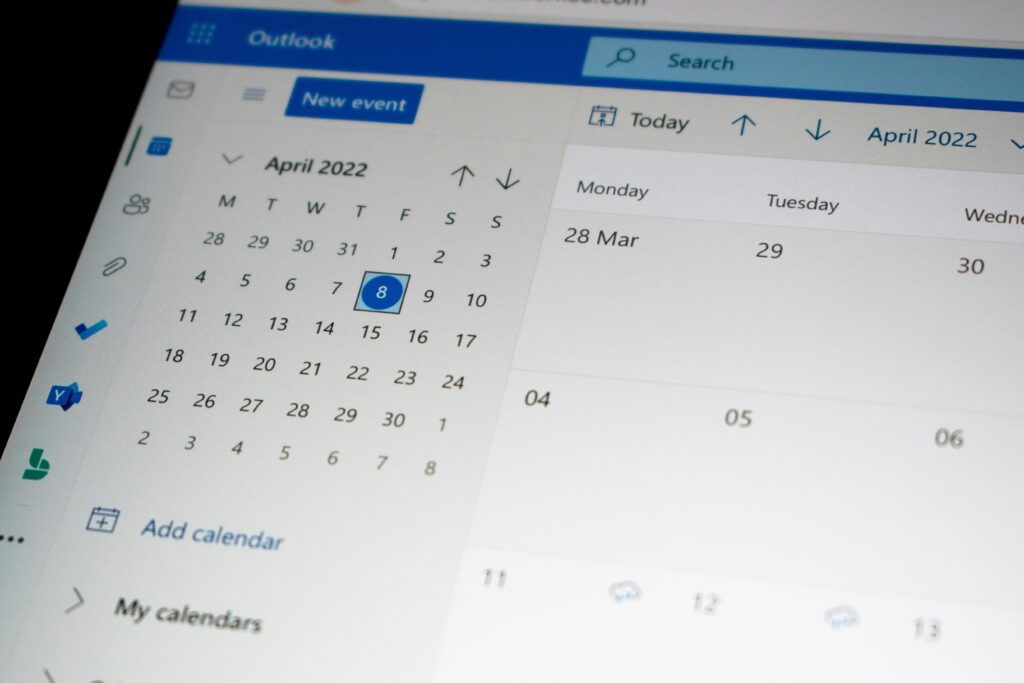
A website with good reviews will have more booked calendar days.
Why TripAdvisor Still Matters in 2026
With so many platforms competing for attention, some operators have quietly deprioritised TripAdvisor — assuming Google reviews or Instagram presence have taken over. This is a costly mistake.
TripAdvisor remains the world\’s largest travel platform, with over half a billion reviews and hundreds of millions of monthly visitors actively planning and comparing travel experiences. For international travelers researching a safari in Kenya — particularly those coming from the UK, Germany, the US, and Australia — TripAdvisor is still a primary trust signal and often the final checkpoint before making a booking decision.
Beyond direct traffic from the platform itself, TripAdvisor data feeds into Google\’s understanding of your business. A strong, consistent review profile on TripAdvisor reinforces your credibility across the wider internet — including how AI tools like ChatGPT and Gemini assess and recommend safari operators. Your TripAdvisor presence is no longer just a standalone rating. It is a signal that feeds your entire digital reputation.
The 5 Ways a Weak TripAdvisor Profile Kills Bookings
Understanding exactly where the damage is happening is the first step to fixing it
1. A low star rating triggers instant elimination
International travelers planning a premium safari are not looking for a bargain. They are looking for certainty — certainty that the experience will be worth the investment. A rating below 4.0 stars removes you from serious consideration almost immediately. Many travelers will not even click through to read the reviews. The number alone is enough to eliminate you from the shortlist.

A magnificent safari experience starts with turning casual website browsers into booked guests.
2. Infrequent or outdated reviews create doubt
A safari company with 47 five-star reviews — but the most recent one dated 14 months ago — sends a troubling signal. Is the business still operating? Has the quality dropped? Did something change? Travelers cannot answer these questions, so they move on to a competitor with recent, active reviews that confirm the experience is still excellent today.
3. Unanswered reviews signal poor client care
Nothing tells a prospective traveler more about how a company operates than how it responds to reviews — especially negative ones. An operator who does not respond to reviews appears either too busy to care or indifferent to guest feedback. Either interpretation is damaging. Conversely, a thoughtful, specific response to a critical review can actually increase booking confidence — it shows accountability, professionalism, and genuine investment in the guest experience.

Workstation for always available support to customer enquiries.
4. Generic five-star reviews provide no social proof
Great experience, highly recommended\” is better than a one-star rating, but it is not doing meaningful work for your brand. The reviews that convert undecided travelers into bookings are detailed, specific, and emotionally resonant — they describe the guide by name, recall the moment a leopard appeared at dawn, mention how the team handled a logistical challenge. These reviews are not luck. They are the result of a deliberate strategy to invite and encourage the right kind of feedback.
5. A sparse review count makes you invisible on the platform
TripAdvisor\’s ranking algorithm favours operators with consistent review velocity — meaning a steady, ongoing flow of reviews rather than occasional spikes. An operator with 200 reviews accumulated over five years will typically rank lower than one with 80 reviews received consistently over the past 18 months. Recency and consistency matter as much as volume.
The 30-Day Fix: A Practical Action Plan
This is not a long-term overhaul. These are the specific actions that move the needle fastest — implementable within 30 days with no technical expertise required.
Week 1: Audit and Claim Your Foundation
Day 1–2: Claim and complete your TripAdvisor listing
If you have not claimed your TripAdvisor Management Centre account, do this first. A claimed listing gives you the ability to respond to reviews, update your business information, and access analytics on how travelers are finding and viewing your profile.
Once claimed, audit every field: business name, contact details, website URL, operating hours, service categories, and description. Inconsistencies between your TripAdvisor listing and your website or Google Business Profile confuse both travelers and search algorithms.
Day 3–5: Audit your photo gallery
Photos are the first thing travelers engage with on your listing — before they read a single review. A profile with dark, low-resolution, or outdated images signals that the business is not actively managed. Replace every photo that does not reflect the current quality of your experience. Prioritize images of actual game drives, authentic guest moments, landscapes, and your team in action. Aim for a minimum of 20 high-quality, recent images.
Day 6–7: Respond to every unanswered review
Go back through your existing reviews and write a personal, specific response to every one that has not been answered — positive and negative. For positive reviews, thank the guest by referencing something specific they mentioned. For negative reviews, acknowledge the experience, take ownership where appropriate, and explain what has changed or improved. This signals to both travelers and TripAdvisor\’s algorithm that your listing is actively managed.
Week 2: Build Your Review Request System
Day 8–10: Design your post-trip review request
The single most effective way to increase review volume is to ask — at the right moment, in the right way. The optimal timing is 24–48 hours after a safari ends, when the experience is vivid and the emotional high is still present.
Draft a short, warm WhatsApp message or email that thanks the guest genuinely, references something specific about their trip, and invites them to share their experience on TripAdvisor with a direct link. Keep it personal — not a template that feels automated. A message that says \”It was wonderful having you with us for the Maasai Mara experience — we hope the lion pride on day two was everything you hoped for\” will generate a far higher response rate than \”Dear valued guest, please leave us a review.\”
Day 11–12: Build the follow-up into your operations
The most common reason operators do not collect reviews consistently is not reluctance — it is forgetting. Build the review request into your post-trip operations as a non-negotiable step. Assign it to a specific team member. Create a simple checklist: safari complete → debrief call or message → 48-hour review request sent. Make it a system, not an afterthought.
Day 13–14: Train your guides and team
Your guides are your most powerful review asset. A guest who felt genuinely connected to their guide — who learned their name, heard their stories, felt their passion for the bush — is far more likely to leave a detailed, glowing review. Brief your guides on the importance of reviews, encourage them to mention it naturally at the end of a game drive, and recognise team members when their names appear in guest feedback. This creates internal buy-in that sustains the system long after week two.
Week 3: Optimise Your Response Strategy
Day 15–17: Create a response framework
Consistency in how you respond to reviews builds a recognisable brand voice and saves time. Develop a simple framework: positive reviews get a warm, specific acknowledgment plus one line about what makes your experience distinctive. Neutral reviews get a thank you, acknowledgment of the specific feedback, and a forward-looking note about improvements. Negative reviews get a calm, professional acknowledgment, a direct response to the specific concern, and an invitation to continue the conversation privately.
The key rule across all responses: never be defensive, never be generic, and always be specific. A response that references the actual content of the review shows that a real person read it — which is exactly the signal prospective travelers are looking for.
Day 18–21: Monitor and respond within 48 hours
Set up TripAdvisor email notifications so you are alerted every time a new review appears. Responding within 48 hours signals active management and prevents negative reviews from sitting unanswered where they do the most damage. Speed matters — both for the guest who left the review and for the traveler who reads it next.
Week 4: Amplify What Is Working
Day 22–24: Repurpose your best reviews as marketing content
Your strongest TripAdvisor reviews are some of the most persuasive marketing copy you will ever have — written by real guests, in their own words, about a real experience. Repurpose them. Share them on Instagram with a stunning image from that guest\’s trip. Feature them on your website\’s testimonials section. Include them in your email marketing. A detailed, emotionally resonant review shared on social media does triple duty: it provides social proof, creates content, and encourages other past guests to share their own experiences.
Day 25–27: Cross-pollinate with Google reviews
Travelers check both TripAdvisor and Google before booking. Once your TripAdvisor review request system is running, add a Google review request to the same post-trip sequence — sent perhaps three to four days after the TripAdvisor request, once the first ask has had time to land. Building both profiles simultaneously creates a consistent, reinforcing reputation signal across the two platforms that matter most to international safari travelers.
Day 28–30: Measure, refine, and commit
At the end of 30 days, assess where you stand: How many new reviews have you received? Has your average rating moved? Are you responding to all reviews within 48 hours? What percentage of post-trip guests are responding to your review request? Use these numbers to refine the system — adjust the timing of your request, test different message formats, and identify which guides or experiences are generating the most detailed feedback.
The Compounding Effect of a Strong Review Profile
Here is what most safari operators do not fully appreciate: the work you do on your TripAdvisor profile in the next 30 days does not just benefit you this month. It compounds.
Every new review raises your average rating. Every rating improvement lifts your ranking on the platform. Every improvement in ranking increases your visibility to the next traveler searching for a safari company in Kenya. A stronger review profile feeds your AI search visibility, your Google credibility, and your ability to convert visitors on your own website. The work is front-loaded. The benefits run for years.
The operators who build this system now — while most of their competitors are still treating reviews as a passive, unpredictable afterthought — will enjoy a reputation advantage that is genuinely difficult to catch up to.
What to Do Next
If your TripAdvisor profile needs attention and you are not sure where to start, the fastest way to get clarity is an honest audit of your current review presence — your rating trajectory, response rate, review velocity, and how you compare to the operators ranking above you on the platform.
At Viktorum, reputation and review management is one of our core services for safari operators and hospitality brands across Kenya. We build the systems, train the teams, and manage the responses so that your review profile becomes one of your most powerful and consistent booking drivers.
If you would like to find out exactly where your review profile stands today and what it would take to fix it, book a free 30-minute marketing audit with our team. We limit these to five spots per month.
Marketing with the Precision of a Compass.
Leave a Reply
Your email address will not be published. Required fields are marked *