

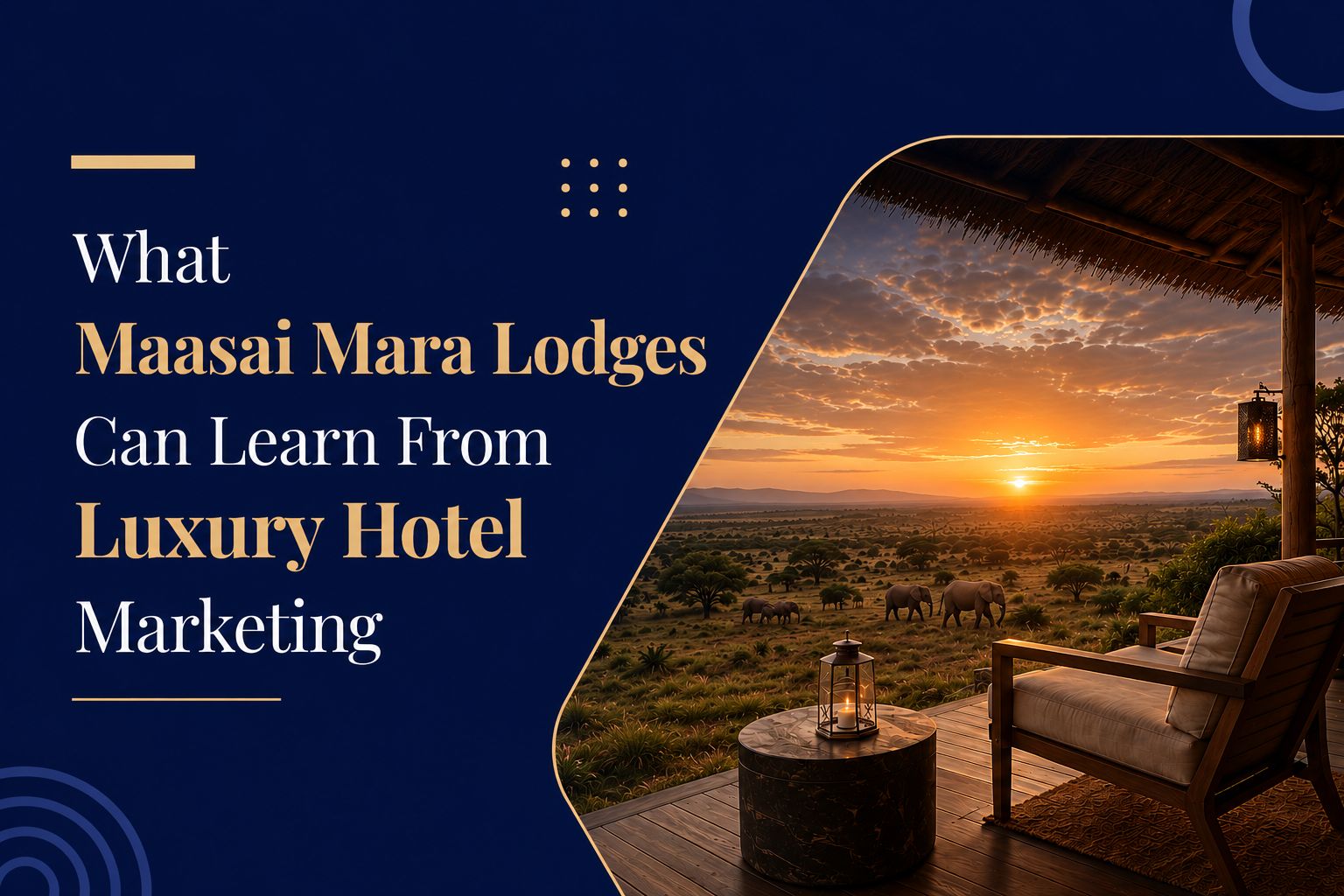
The Maasai Mara is one of the most extraordinary wildlife destinations on earth. Visitors cross oceans and continents to witness the Great Migration, sleep under canvas skies, and wake to the sound of lions at dawn. The experience is world-class. The marketing, more often than not, is not.
While luxury hotel groups around the world have spent decades refining how they attract, convert, and retain high-value guests, many Maasai Mara lodges are still relying on outdated brochure-style websites, inconsistent social media, and near-total dependence on OTA platforms that quietly take 15–25% of every booking. The gap between the experience these lodges offer and how they present themselves online is not just a marketing problem — it is a revenue problem.
Here is what the best luxury hotel brands do differently, and how Maasai Mara lodges can apply the same thinking without losing what makes them special.
1. They Sell the Emotion Before They Sell the Room
Walk through the website of any leading luxury hotel group — Aman, Singita, or Belmond — and you will notice something immediately. They do not lead with prices, room types, or availability. They lead with feeling. Sweeping imagery, minimal text, and copy that reads more like travel journalism than a product listing.
The best Maasai Mara lodges have an extraordinary story to tell: conservation work, Maasai community partnerships, chefs cooking over open fires, guides who have spent thirty years reading the bush. Yet most lodge websites bury this beneath generic headlines like “Unforgettable Safari Experiences Await.”
What to do: Lead every page — home, about, accommodations — with the emotional core of your lodge. What does a guest feel at 6am on their first game drive? What does it smell like after the afternoon rains? That specificity is what separates a memorable brand from a forgettable listing.
2. They Control Their Own Booking Journey
Luxury hotel groups invest heavily in direct booking infrastructure — not because OTAs are the enemy, but because they understand that a guest who books directly is worth significantly more over time. They arrive pre-sold on the brand, spend more on experiences and upgrades, and are far more likely to return.
For Maasai Mara lodges, OTA dependence is a structural vulnerability. When Booking.com or Expedia changes its algorithm or increases its commission rate, your revenue changes with it — and there is nothing you can do about it.
What to do: Treat your website as your most important sales channel, not a digital brochure. Invest in a clean, fast, mobile-optimized booking engine. Offer a direct booking incentive (early check-in, a complimentary bush breakfast, a room upgrade) that OTAs cannot match. Then drive traffic to it through SEO, email marketing, and retargeting — channels you own and control.
3. They Build a Pre-Arrival Experience
The moment a guest books a luxury hotel, the brand begins delivering value immediately. A welcome email from the General Manager. A pre-arrival questionnaire asking about dietary preferences, special occasions, and what they most hope to experience. Curated reading lists and destination guides sent in the weeks before arrival.
By the time a guest walks through the door, they feel known. They feel looked after. The relationship has already begun.
Most Maasai Mara lodges send a booking confirmation and nothing else until the guest arrives. That silence is a missed opportunity — both for guest experience and for revenue generation (pre-selling game drives, sundowner experiences, conservation tours).
What to do: Build a simple pre-arrival email sequence — three to four emails sent between booking and arrival. Introduce the team, share what to pack, highlight the experiences available during their stay, and ask what would make their visit exceptional. This costs almost nothing and dramatically increases both guest satisfaction and ancillary spend.
4. They Treat Reviews as a Marketing System
Luxury hotel brands monitor, respond to, and actively generate guest reviews as part of a structured marketing operation — not as an afterthought. They know that a consistent flow of detailed, positive reviews on Google, TripAdvisor, and Booking.com directly affects both search ranking and booking conversion.
Review management in the luxury hotel world is not reactive (reading bad reviews when they appear). It is proactive: automated post-stay requests sent at the optimal moment, thoughtful management responses that reinforce brand values, and insights from reviews fed back into operations and marketing content.
What to do: Implement a post-stay review request system — a simple WhatsApp message or email sent 48 hours after departure, thanking the guest and inviting them to share their experience. Respond to every review publicly, positive and negative, with warmth and specificity. The way you respond to a critical review tells prospective guests more about your lodge than a hundred five-star ratings.
5. They Optimize for AI and the New Search Landscape
This one is recent, and most lodges — and many agencies — have not caught up yet. When travelers today plan a high-value trip to Kenya, a growing number of them do not start with Google. They open ChatGPT, Gemini, or Perplexity and ask: “What is the best luxury lodge in the Maasai Mara for a first-time safari?” or “Which Mara lodges are best for the Great Migration?”
Luxury hotel groups with sophisticated marketing teams are already optimizing their digital presence to appear in these AI-generated responses — a discipline known as Generative Engine Optimization (GEO). Lodges that are well-represented in credible online sources, travel publications, and structured website content are far more likely to be recommended by AI tools than those with thin or outdated digital footprints.
What to do: Invest in content that answers the specific questions international travelers are asking about the Maasai Mara. Detailed destination guides, comparison content, conservation stories, and media coverage all feed into how AI tools perceive and recommend your property. This is no longer a future consideration — it is a present one.
6. They Never Stop Marketing to Past Guests
Acquiring a new guest costs significantly more than retaining an existing one. Luxury hotel brands know this and build entire marketing programs around past guest relationships — anniversary emails, loyalty offers, early access to seasonal availability, and personal outreach from the property team.
A guest who had an extraordinary experience at your Maasai Mara lodge is not just a past visitor. They are a potential repeat booker, a referral source, and a word-of-mouth ambassador in exactly the high-income social circles you want to reach. Treating the relationship as closed the moment they check out is one of the most expensive mistakes a lodge can make.
What to do: Build and maintain a clean guest database. Segment by visit date, interests, and nationality. Send at least two or three thoughtful communications per year — a Great Migration season update, a conservation milestone, a personal note from the lodge manager. The goal is not to sell on every communication. The goal is to stay present in the guest’s mind so that when they plan their next safari, or recommend one to a friend, your lodge is the first name they think of.
The Gap Is an Opportunity
The distance between where most Maasai Mara lodges are marketing today and where the best luxury hotel brands operate is significant — but it is not insurmountable. The lodges that close this gap in the next two to three years will enjoy a compounding advantage: stronger direct booking revenue, higher guest lifetime value, better OTA independence, and a brand reputation that attracts premium travelers without constant discounting.
The Maasai Mara experience is already world-class. The marketing just needs to match it.
To book yours, WhatsApp us directly.
Because the next time Sarah opens Google at 9pm in London, your safari company should be one of the first three she finds.
At Viktorum, we work exclusively with hospitality brands — hotels, safari operators, lodges, and tour companies — helping them build marketing systems that attract more guests, increase direct bookings, and reduce dependence on costly third-party platforms. If you would like an honest look at where your lodge’s marketing stands today, book a free 30-minute audit with our team.
Marketing with the Precision of a Compass.
0 Comments